For a family of four, how often to pump septic tank family of 4 homes need depends on tank size, water use, and waste levels. Many homes need regular septic pumping, but no single schedule fits every property. Records, inspections, and warning signs help set the safest time for service.
Table of Contents
- How often should a family of four pump a septic tank?
- Can homeowners handle septic tank maintenance themselves?
- What should you do before scheduling septic tank pumping?
- What happens during a septic tank pumping appointment?
- What can go wrong when a septic tank is not pumped on time?
- When should you call a septic tank pumping professional?
- How can a family of four maintain a septic system between pump-outs?
- Key takeaways
- Frequently Asked Questions
- Conclusion
How often should a family of four pump a septic tank?
A family of four should set a pumping plan based on tank size, water use, and waste. Household size gives you a starting point, but it does not give one answer for every home. A smaller tank may need service sooner than a larger tank used by the same number of people.
A septic tank is a buried container for household wastewater. It lets solids settle while liquids move toward the drainfield. The drainfield is the soil area that treats the liquid. Sludge is settled solid waste, while scum is the floating layer of grease and light waste. Pumping removes these layers before they affect normal flow.
What determines the right pumping schedule?
Several details help set the right time for service:
- The tank size and design
- The number of people using the system
- Daily water use and laundry habits
- The amount of grease and solid waste entering the tank
- The age and condition of the septic system
- Whether the property has a garbage disposal
A home with heavy water use may need more frequent service. Many loads of laundry, long showers, and leaking fixtures add water to the tank. A garbage disposal can also send more solid waste into the system.
Septic Tank Pumping Monroe can help Monroe homeowners review old records and plan care. The plan should match the tank, the home, and past service visits. It should change if the family grows or water use changes.
Can homeowners handle septic tank maintenance themselves?
Homeowners can do simple checks and daily care. They should not inspect or pump an open septic tank themselves. A property owner can watch for leaks, protect the drainfield, and keep service records. A trained worker should handle tank access, sludge checks, pumping, and system tests.
Routine tasks property owners can manage
Most homeowners can safely handle these tasks:
- Check toilets and faucets for leaks
- Keep cars and heavy equipment off the drainfield
- Keep deep-rooted trees away from tank and pipe areas
- Use water with care during busy laundry days
- Record pumping, repairs, and inspections
- Flush only human waste and toilet paper
A homeowner can also look for wet spots, odors, or very green grass near the tank. These checks do not require opening the tank. They help a family spot changes before a small concern becomes a larger one.
Why tank inspection and pumping are not DIY jobs
A septic tank can hold harmful gases and unsafe wastewater. Opening a lid without training can cause serious injury. Pumping also needs the right truck, tools, and waste handling. A trained worker can check sludge, inspect baffles, and look for damage.
A septic system includes more than a tank. It also has pipes, soil, vents, and a drainfield. A cesspool is not the same as a modern septic system. Knowing the system type helps owners plan the right care. Septic Tank Pumping Monroe can explain the difference and help property owners understand their setup.
What should you do before scheduling septic tank pumping?
Before scheduling service, gather system records and walk around the property. This helps the worker prepare for the visit. It may also show whether the home needs routine pumping or faster help.
Check household records and system details
Look for the tank installation record, old pumping receipts, inspection reports, and repair papers. Note the tank material, size, location, and age if you know them. Concrete and plastic tanks may have different access points and inspection needs.
You may not know how deep the septic tank is buried. Depth can change with soil, grading, tank design, and past yard work. Do not uncover the tank by guessing or digging near utility lines. Records and trained locating tools are safer ways to find it.
Write down recent changes in the home. New residents, another bathroom, a garbage disposal, or frequent guests can change the system load. Sharing these details gives the worker a clearer view of the problem.
Look for warning signs around the property
Before booking, check for slow drains, sewage odors, gurgling toilets, wet ground, or wastewater near the drainfield. Grass that stays very green in one spot can also be a warning sign. These signs may point to a full tank, blocked pipe, or drainfield issue.
Do not wait until every fixture stops working. A system can show early signs before a backup. Keep children and pets away from sewage. Avoid walking on soft or wet soil, and take notes instead of opening the tank.
What happens during a septic tank pumping appointment?
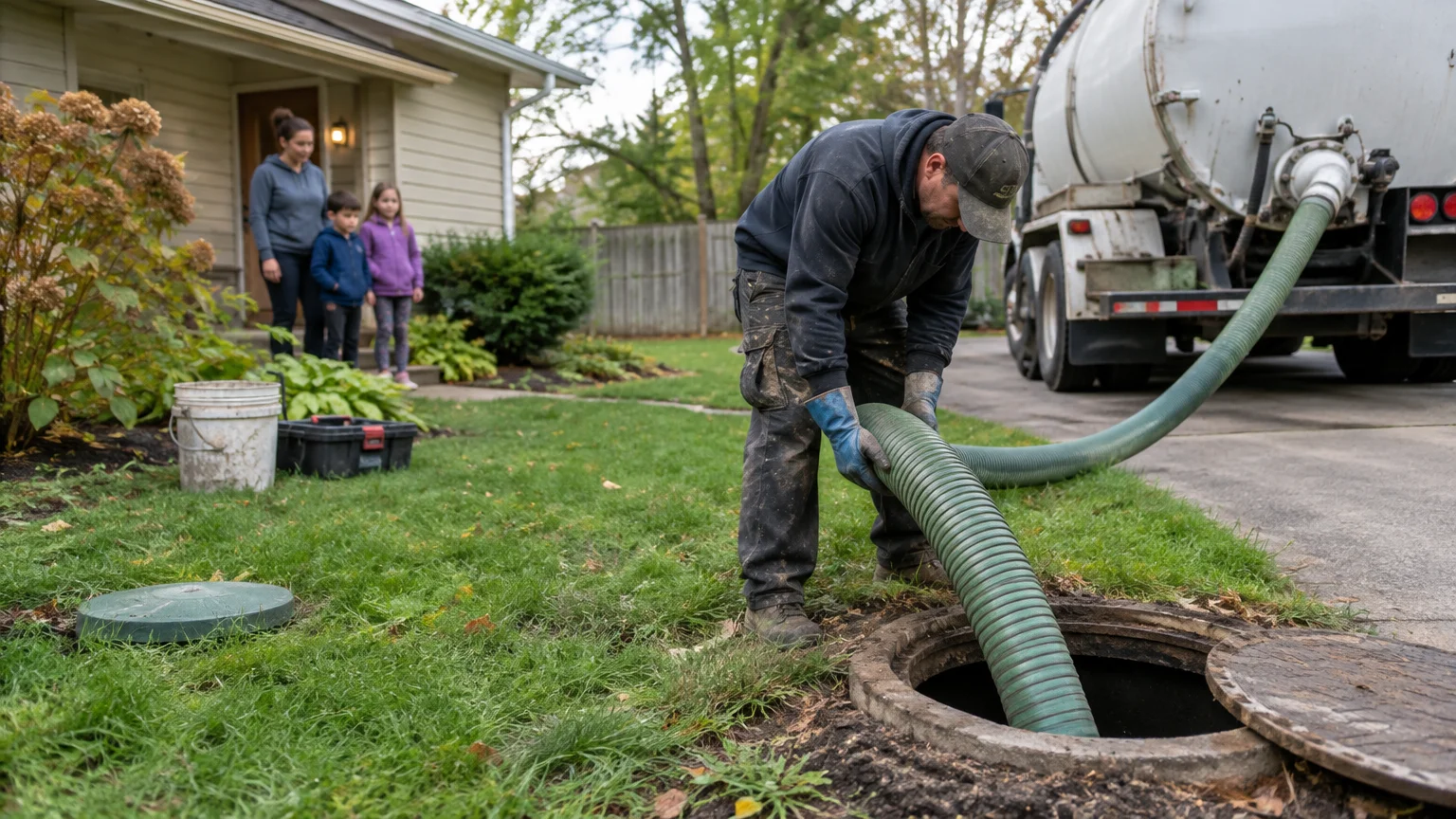
During a septic tank pumping appointment, a trained worker finds the tank, safely opens the access points, and removes settled waste. The worker also checks key parts of the system. The exact steps depend on tank location, access, condition, and yard layout.
How the tank is located and accessed
The worker may review records, use a probe, or use another locating tool. They may also trace plumbing from the home. After finding the tank, the worker uncovers the lids when needed. Keep cars, furniture, and other items away from the work area.
Never enter a septic tank. A trained worker uses safe tools and steps around the opening. Septic gases can be dangerous even when the tank looks clean. Children and pets should stay away during the appointment.
What professionals inspect while pumping
Pumping removes the sludge and scum layers. The worker may check the inlet and outlet baffles, tank walls, lids, and visible pipes. They may also note damage, heavy buildup, or signs that wastewater is not leaving the tank as it should.
Pumping does not fix every septic problem. A blocked line, broken baffle, damaged lid, or failing drainfield may need other work. Ask what the worker found and keep the service record. That record helps Septic Tank Pumping Monroe and the property owner plan future care.
What can go wrong when a septic tank is not pumped on time?
When a tank is not pumped on time, solids may move toward the drainfield. This can limit wastewater flow and cause slow drains, odors, backups, or wet soil. Delayed care may turn a simple service need into a larger system problem.
Common signs of an overloaded or failing system
Property owners should watch for these signs:
- Toilets flush slowly or make a gurgling sound
- Several drains become slow at the same time
- Sewage odors appear inside or outside
- Wastewater collects near the tank or drainfield
- Grass grows thick and bright over one area
- Sewage backs up into a shower or floor drain
One sign does not prove the cause. A blocked household drain can look like a septic issue. Several signs together need quick attention. Limit water use and keep people away from sewage until the cause is known.
How delayed maintenance can affect the drainfield
The drainfield needs open soil spaces for liquid wastewater. Extra solids can clog these spaces and slow the flow through the soil. Once the drainfield is harmed, pumping alone may not solve the issue.
A failing septic system can affect soil, plants, and nearby water. Local rules may guide repairs, replacement, or discharge. A trained worker can explain the next step after checking the system. Questions about septic tank replacement should be answered after the site, access, tank, and needed work are reviewed. The final cost is confirmed on a quote.
When should you call a septic tank pumping professional?
Call a septic tank pumping professional when the last service date is unknown, the tank may be full, or warning signs appear. Prompt help matters when sewage backs up or wastewater reaches the ground. Waiting for total failure can put the home and drainfield at greater risk.
Situations that need prompt service
Contact a professional when:
- The last pump-out date is unknown
- The tank has reached its planned service time
- Several drains slow down together
- Sewage odors continue after basic drain checks
- Wastewater appears near the tank or drainfield
- A toilet or drain backs up with sewage
- The property is being bought, sold, or rented
A first-time buyer should request septic records and an inspection before relying on the system. Investors and landlords should keep service papers with the property file. Tenants should report odors, backups, and wet ground to the property owner right away.
What information to share when requesting help
Share the property location, tank type if known, last service date, household size, recent signs, and access concerns. It also helps to mention a garbage disposal, extra bathrooms, or recent plumbing work.
Septic Tank Pumping Monroe helps property owners sort routine care from urgent concerns. A clear description helps the team plan the visit. Ask what the appointment includes, and have the final cost confirmed on a quote before work starts.
How can a family of four maintain a septic system between pump-outs?
A family of four can protect its septic system by using water wisely, limiting harmful waste, and keeping good records. These habits reduce stress on the tank and drainfield. They do not replace inspections or planned pumping.
Water-use and waste-disposal habits that help
Repair leaks quickly and avoid running many water-heavy appliances together. Spread laundry across the week. Try not to run showers, baths, and dishwashers during a short period when the system is already busy.
Only human waste and toilet paper belong in the toilet. Wipes, paper towels, feminine products, cotton swabs, cat litter, and medicines belong in the proper waste stream. Do not pour grease, paint, harsh chemicals, or large amounts of cleaner down household drains.
Keep sheds, pools, vehicles, and heavy traffic off the drainfield. Do not direct roof water or runoff from paved areas toward it. These simple steps help the soil receive wastewater as designed.
A practical maintenance record for homeowners
A simple record should list the tank location, size, material, pumping dates, inspection notes, repairs, and changes in household use. Keep it with other home papers, not only on a phone that may be replaced.
Review the record before moving into a home, renting it, or listing it for sale. If records are missing, a trained worker can help find the tank and check its condition. Septic Tank Pumping Monroe can help Monroe families make a clear care plan between pump-outs.
Key takeaways
- Pumping time depends on tank size, water use, and household waste.
- Homeowners can do simple checks but should not open or pump a tank.
- Odors, slow drains, wet soil, and backups need prompt attention.
- Service records help families plan care and explain changes in use.
- Careful water and waste habits support the tank and drainfield.
Frequently Asked Questions
How often should a family of four pump its septic tank?
The schedule depends on tank size, water use, and solid waste. A family of four may need a different schedule from another family of four. Past records and professional inspections give a better guide than household size alone.
How deep is a septic tank usually buried?
A septic tank may sit at different depths because of soil, grading, design, and installation choices. Do not dig at random to find it. Records and locating tools are safer, especially near utility lines or planted areas.
What is a septic system?
A septic system treats household wastewater on the property. It usually includes a tank, pipes, and a drainfield. Solids settle in the tank while liquid moves toward the drainfield for soil treatment. Each part needs care because the parts work together.
Can a homeowner inspect a septic tank alone?
A homeowner can check the yard, fixtures, odors, and service records without opening the tank. Tank access and inspection are not safe DIY tasks. Septic gases and wastewater can cause serious harm. A trained worker should inspect the tank and measure its contents.
What should a homeowner do during a septic backup?
Stop using water, keep people and pets away from sewage, and contact a septic professional. Do not open the tank or pour harsh chemicals into drains. Photos and notes about the backup can help explain the problem during the visit.
Conclusion
Knowing how often to pump septic tank family of 4 homes need takes more than counting people. Tank size, water use, waste habits, system age, and old records all matter. Homeowners can handle basic care, but safe pumping and inspection need trained help.
Contact us to arrange septic tank pumping guidance for your property in Monroe.