The answer to how deep is the septic tank depends on the land, tank design, pipes, and site plan. Many tanks sit below the soil, but their lids may be shallow or deeply buried. Records, careful locating, and a septic professional can show the true depth without harming the system.
A buried septic tank can concern a homeowner, tenant, buyer, or investor. A lid may sit under grass, gravel, or landscaping. Finding it matters because safe access helps with pumping, inspections, repairs, and future property records.
Septic Tank Pumping Monroe helps property owners understand tank access and care. The right answer comes from the approved site plan and the property itself. It should not come from a guess based on another home in Monroe.
Table of Contents
- How deep is a septic tank usually buried?
- What determines how deep a septic tank is installed?
- How can you find the depth of your septic tank?
- How far below ground should septic tank lids be?
- Does septic tank depth affect pumping and maintenance?
- What setbacks apply to a septic tank and drainfield?
- What should you do if you cannot find or safely access the tank?
- Frequently Asked Questions
- Key takeaways
- Conclusion
How deep is a septic tank usually buried?
A septic tank is often below the ground, but no single depth fits every home. Some tanks sit close to the surface. Others have several feet of soil above them. The inlet pipe, outlet pipe, slope, soil, tank shape, and local rules all affect the final depth.
Typical tank depths for common septic system designs
Many home septic tanks are buried deep enough to protect them during normal yard use. Soil cover can help protect the tank from weather, lawn tools, and light traffic. Even so, a property owner should not assume that every tank has the same burial depth.
Some tanks have lids close to the surface. Others have lids below the finished grade. This can happen on a sloped lot or near a raised drainfield. Concrete and plastic tanks may also have different shapes and access points. The tank may be deeper than the lid makes it seem.
The most useful measurement is from the current ground surface to each lid. A tank may have more than one lid. Those lids may not sit at the same depth. During service, a professional may check the inlet, outlet, and center access points.
Why the tank lid may be closer to or farther from the surface
Landscaping can change the depth that you see over time. Soil may be added during grading. Erosion may uncover part of a lid. Driveways, patios, gardens, and raised beds can also hide access points or add weight above them.
Do not drive heavy equipment over a suspected tank. The cover may be strong, but the soil and other access parts may not hold vehicle weight. Keep lids clear and marked. This makes future septic tank pumping safer and easier.
What determines how deep a septic tank is installed?
Septic tank depth depends on the home, tank, drainfield, and land slope. The installer must create a path for wastewater to move. The system must also stay safe for the soil and nearby water sources. The approved site plan is the best record of that design.
Soil, slope, drainage, and local site conditions
A sloped lot may let wastewater flow to the tank by gravity. A flat lot may need a pump part. Soil type also matters. Wet, rocky, sandy, or hard soil can change the way the tank and drainfield are built.
The water table matters too. The water table is the level where the ground becomes full of water. A tank and drainfield must be placed so the system can treat wastewater in a safe way. Local health offices may review soil tests, water levels, and the planned system.
Drainage around the tank is also important. Rain should flow away from the lids and risers. A riser is a tube that brings a tank opening closer to the surface. Standing water near the tank can make access unsafe. It may also show a grading or drainage issue.
Tank size, inlet and outlet pipes, and system layout
Tank size changes the shape and space used by the system. It does not create one standard burial depth. The inlet pipe connects the building sewer to the tank. The outlet pipe leads toward the drainfield. Their heights often help set the tank position.
A septic system is a group of parts that collects, settles, and treats household wastewater. The tank holds the wastewater while solids sink. Liquid then moves toward the drainfield. The drainfield gives the soil more time to treat that liquid.
The layout may also include more than one tank, a pump tank, filters, or distribution boxes. A distribution box sends wastewater to parts of the drainfield. Digging in one place may miss the tank or damage a connected line. A site plan is safer than guesswork.
How can you find the depth of your septic tank?
The safest way to find septic tank depth is to check records first. Then locate the tank without force and measure each access point with care. Do not dig blindly near pipes, power parts, or lids. A professional can help when records are missing or unclear.
Checking property records, installation plans, and access points
Start with closing papers, permit files, inspection reports, and installation plans. A local health or environmental office may keep approved records. Past owners, landlords, contractors, and service records may also show where the tank sits.
The building sewer can give you a useful clue. It often leaves the home and travels toward the tank. The route may change around an addition, driveway, or other structure. A cleanout may help you follow the line, but it does not prove the tank location.
A professional may use a probe, electronic locator, or another safe tool. The best method depends on the soil, surface, and system design. The goal is to find the lid without cracking it, breaking a pipe, or disturbing the drainfield.
Safe ways to locate buried lids without damaging the system
Some simple checks are safe for a homeowner to do. You can review records, trim grass, clear loose debris, and mark clues on the surface. You can also keep cars and heavy tools away from the suspected tank area. These steps do not require opening the tank or deep digging.
Stop if the soil becomes unstable. Stop if a lid looks damaged or if you suspect a buried cable or pipe. Septic gases can be dangerous. An open tank can also cause a fall. Never enter a tank or lean over an open access point.
After finding the depth, record it with photos and measurements. Draw a simple yard map. Include the home, driveway, fence, and other fixed points. This can help tenants, future buyers, workers, and emergency crews find the system later.
How far below ground should septic tank lids be?
Septic tank lids should be secure, stable, and easy to reach for inspections and pumping. Their best position depends on the tank design and local rules. A lid buried too deeply can make routine care harder. An exposed or damaged lid can create a safety risk.
Why accessible lids matter for inspections and pumping
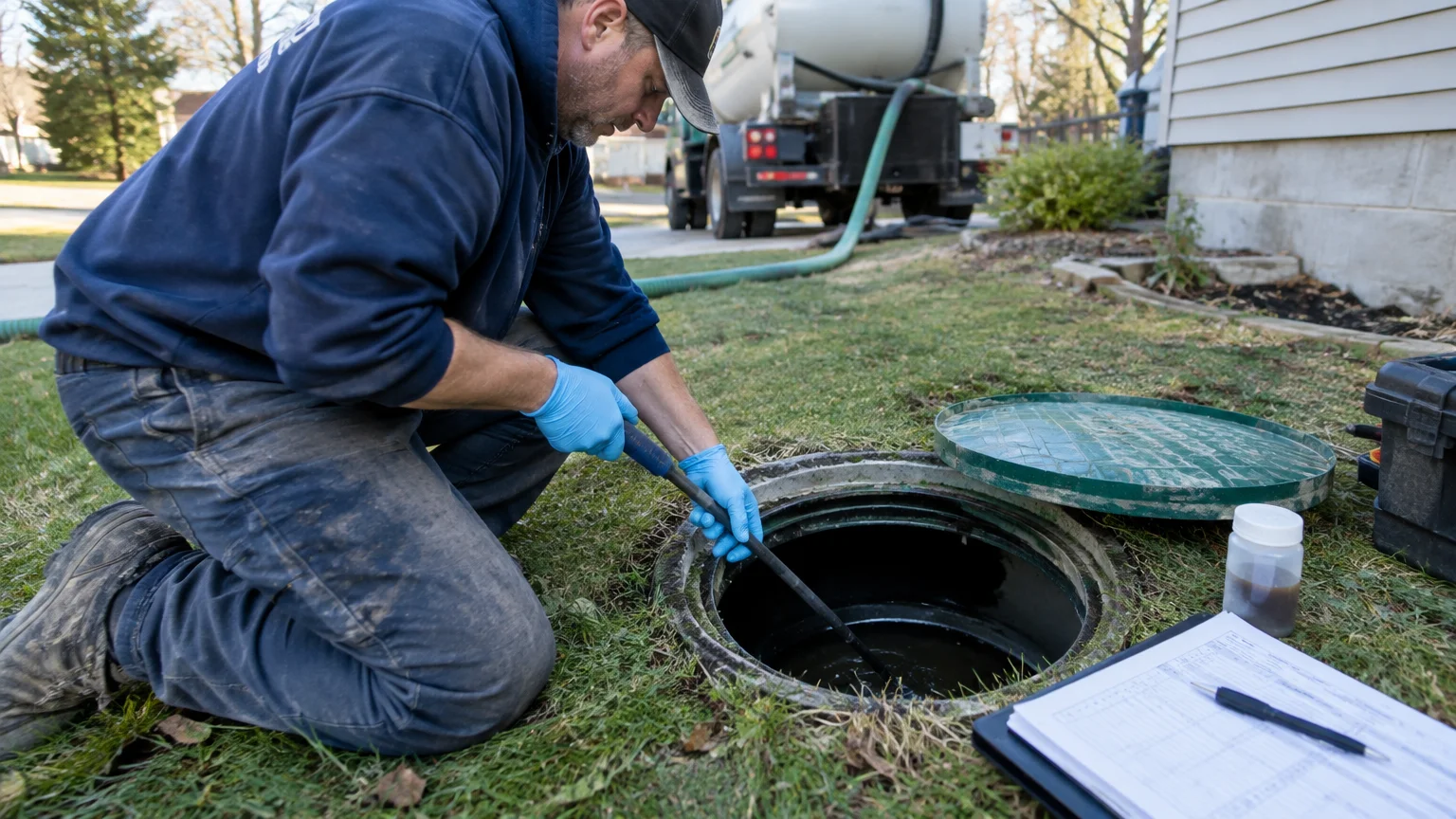
Pumping a septic system requires safe access to the tank. A worker may need to open more than one lid. This allows the worker to remove solids and check key parts. One small opening may not give a clear view of the whole tank.
Accessible lids also help with care between pumping visits. Filters, baffles, alarms, and pipes may need checks. Baffles help guide wastewater into and out of the tank. When access points are known and protected, service work needs less digging and causes less yard damage.
The soil around a lid should be firm and level. Avoid plants with deep roots directly over the tank. Keep notes after adding soil, paving, or changing the yard level. These changes can hide the lid or change its depth.
When risers can improve access to a deeply buried tank
A riser is a vertical tube that runs from the tank lid toward the ground surface. A properly fitted riser can reduce future digging. It can also make inspections and pumping easier. The riser still needs a sealed cover that is strong enough for its location.
A septic professional should choose the riser and check that it fits the tank. Local rules may require approval for the work. Poor installation may let rain enter the tank. It may also allow gases to escape or leave a weak cover that is unsafe for people and pets.
Does septic tank depth affect pumping and maintenance?
Yes. Tank depth can affect how a worker reaches the lids, sets up equipment, protects the yard, and checks the system. Depth alone does not prove that a system is failing. Hard access can delay care and make planning more important.
How depth changes access, equipment setup, and service planning
A shallow tank may be easier to locate, but its lids still need safe space around them. A deeply buried tank may need careful digging or a riser before service. Soil, slope, driveways, and nearby buildings can also affect access.
Tell the service provider where you think the tank is. Mention recent grading, flooding, building work, landscaping, or home changes. These details help the provider plan the visit and avoid damage.
Regular septic pumping removes settled solids before they fill too much of the tank. The right schedule depends on the household, tank size, water use, and solids found during service. A local professional can help create a record based on the actual system.
Signs that buried or difficult-to-access lids need attention
Several signs show that the access setup may need a closer look:
- The tank cannot be found from the available plans or safe surface clues.
- Soil has covered a lid after grading or landscaping work.
- A lid is cracked, loose, missing, or surrounded by soft soil.
- Rainwater gathers around the access point after storms.
- A contractor plans to pave, build, or plant near the suspected tank.
These signs do not always mean the tank has failed. They do mean you should avoid guessing. Arrange a careful check before digging or changing the yard. Septic Tank Pumping Monroe can help Monroe homeowners gather useful information before septic system pumping services.
What setbacks apply to a septic tank and drainfield?
Setbacks are required spaces between a septic system and nearby features. These may include buildings, wells, property lines, water, and drainage areas. Exact rules vary by state, county, and health office. The approved site plan and current local rules control the placement.
Common separation points from buildings, wells, property lines, and water
A tank and drainfield may need space from the home, sheds, wells, streams, ponds, wetlands, property lines, and steep slopes. Roads, pools, paved areas, and buried utilities may also affect the layout.
The tank and drainfield may not have the same setback rules. A tank may sit closer to a building than the drainfield. A well may need more protection from the treatment area. A professional or local health office can explain which rule applies to each part.
A perc test is a soil test that checks how quickly water moves through the ground. It may be part of a septic review or new system approval. Local health officials, soil professionals, or approved site evaluators may handle the test, based on local rules.
Why local regulations and the approved site plan control placement
Do not move a tank, add a drainfield, or build over the system based on a neighbor's layout. Soil, lot size, water features, and old permits may differ. A plan approved for one property may not work on another.
Keep the permit, site plan, tank location, and service notes together. Before buying or changing a property, ask who inspected the system. Also ask if the records match what you can see in the yard.
For local context, Septic Tank Pumping Monroe serves property owners and nearby areas. These include Downtown Monroe, Walnut Grove, Good Hope, Between, and Loganville. The local authority should confirm current setback rules before any project begins.
What should you do if you cannot find or safely access the tank?
Stop digging when the tank location is not clear, the ground feels unsafe, or a lid will not open without force. A qualified septic professional can locate the tank and check its access points. Guessing may damage the system or create a fall or gas danger.
When to stop digging and contact a septic professional
A homeowner can review records and clear loose surface debris. A homeowner should not enter a tank, break a lid, cut unknown pipes, or use heavy equipment over the suspected tank. Strong odors, wastewater, soft soil, or a damaged cover require extra care.
Professional help is wise before a property is sold, rented, remodeled, graded, paved, or landscaped. The provider may locate the tank and drainfield. They may also measure access depth, inspect visible parts, and note issues that need more work.
A septic issue may not look like an indoor plumbing issue. Slow drains, wet spots, odors, sewage backup, or very green growth near the drainfield can signal trouble. Do not hide these signs with more soil.
What to document for future owners, tenants, and maintenance visits
Keep a record of the tank location, access depth, lid condition, riser details, drainfield area, permits, and service dates. Photos should show nearby fixed points. Good points include a home corner, driveway, fence, or utility marker.
Also note repairs, added soil, flooding, landscaping changes, and known setbacks. Tenants should tell the property owner about access problems or wastewater concerns. Buyers and investors should request records before making property plans.
When the tank is hard to find, careful help can protect both the yard and system. The team at Septic Tank Pumping Monroe can explain what to prepare for a service visit.
Frequently Asked Questions
How deep should a septic tank be?
There is no single required depth for every septic tank. A tank may sit shallow or several feet below the soil. The building sewer, slope, soil, tank design, and local rules all affect depth. The approved site plan and a careful lid measurement are better than a general guess.
How far is a septic tank from a house?
The distance from a house to a septic tank depends on local setbacks, the sewer route, lot shape, and system design. The drainfield may have different rules. Check the site plan and local health requirements before building, grading, or moving any part of the system.
Who performs a perc test?
A local health office, licensed soil professional, engineer, or approved evaluator may perform or oversee a perc test. The exact role depends on the state and county. Ask the local permitting office who is allowed to perform the test in that area.
How does a septic system work?
A septic system collects wastewater from a building in a buried tank. Heavy solids sink, while lighter material rises. Liquid moves toward the drainfield. Soil gives the liquid more treatment as it moves through the ground. Inspections and pumping help keep solids out of the drainfield.
Can a homeowner uncover a septic tank?
A homeowner can check records, clear loose debris, and make safe surface observations. Deep digging is risky when the tank location is unclear. A professional should locate buried lids and check damaged covers. No one should enter a septic tank or lean over an open lid.
Key takeaways
- Septic tank depth depends on the land, pipes, tank design, and site plan.
- Tank lids should stay secure, marked, and safe to reach.
- Records and careful locating are safer than blind digging.
- Risers may make access easier when installed correctly.
- Setbacks vary by local rules and differ for tanks and drainfields.
Conclusion
The answer to how deep is the septic tank differs from one property to another. Soil, slope, wastewater pipes, tank design, drainage, and local rules shape the final setup. A visible lid does not show the full tank depth. A hidden lid does not prove the system is damaged.
The best plan is simple. Check the records, protect the suspected area, and write down what you know. Stop when digging becomes uncertain. Septic Tank Pumping Monroe can help Monroe property owners plan safe inspections, pumping, and tank access.
Contact us today to discuss your septic tank access needs with Septic Tank Pumping Monroe.