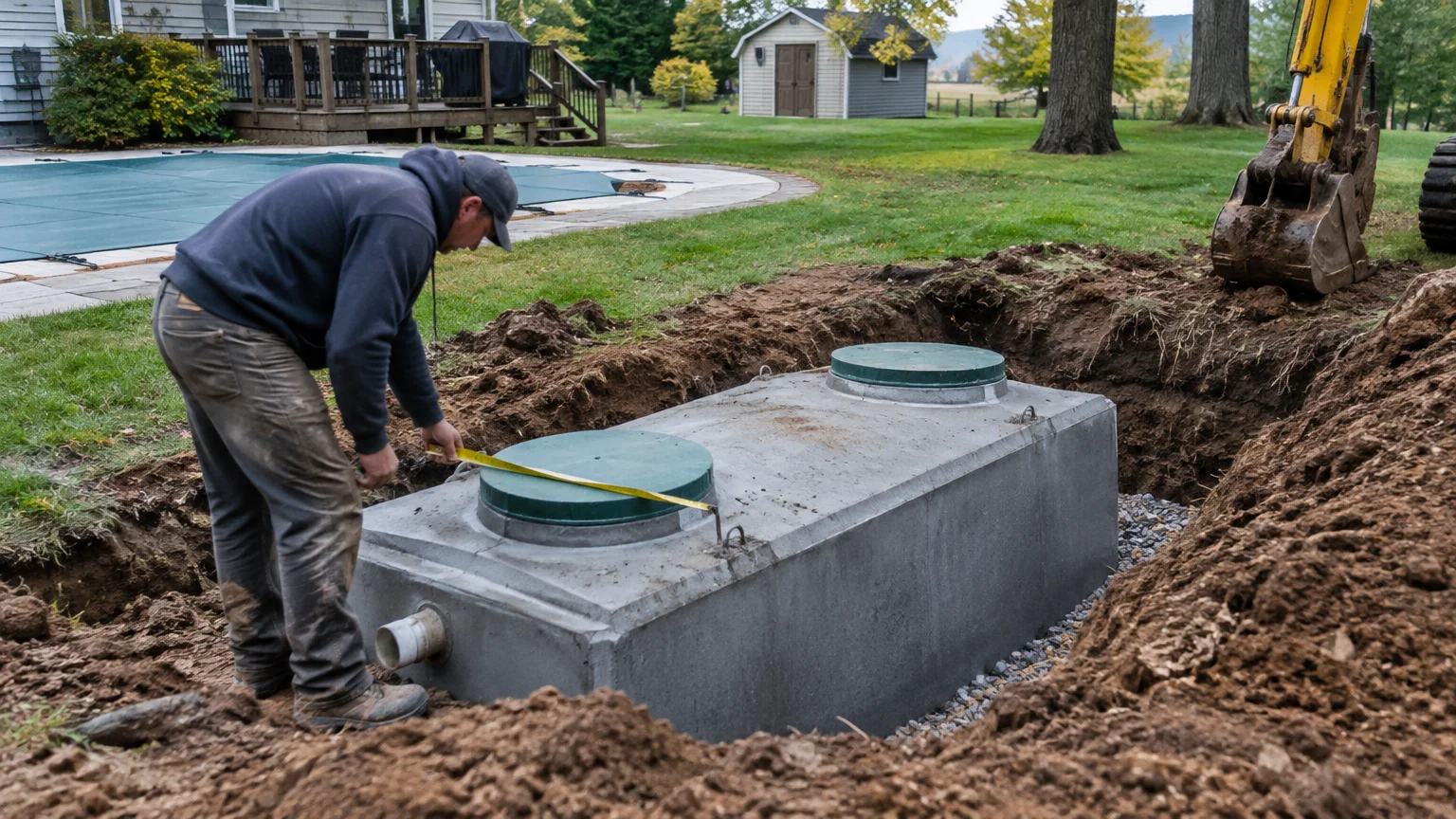
A 1000-gallon septic tank is often about 8 to 10 feet long, 5 to 8 feet wide, and 5 to 7 feet tall. The exact size depends on the maker, material, and tank shape. It also needs safe access, proper burial depth, and enough room for a septic pumping truck to work.
Table of Contents
- What Are the Typical Dimensions of a 1000 Gallon Septic Tank?
- How Much Space Does a 1000 Gallon Septic Tank Need?
- How Deep Is a 1000 Gallon Septic Tank Buried?
- What Changes the Size and Shape of a 1000 Gallon Septic Tank?
- What Setbacks Apply to a 1000 Gallon Septic Tank?
- How Can You Find a 1000 Gallon Septic Tank on Your Property?
- Is a 1000 Gallon Septic Tank Large Enough for Your Property?
- Key Takeaways
- Frequently Asked Questions
- Conclusion
What Are the Typical Dimensions of a 1000 Gallon Septic Tank?
A 1000-gallon tank can measure several feet in length, width, and height. Many tanks use a ground area of about 40 to 80 square feet. The exact size should come from the maker’s drawing or the property records.
Common Length, Width, and Height Ranges
A common concrete tank is about 8 to 10 feet long. Its width may be 5 to 8 feet. Its height often ranges from 5 to 7 feet, but some tanks are taller or more compact.
These are the outside measurements. They do not show the level of liquid inside the tank. Wastewater stays below the inlet pipe. The open space above the liquid helps hold gases and floating waste safely.
Tank shape also changes the measurements. A long, narrow tank may fit better in a small yard. A shorter, wider tank may work well on open land. A round tank can use less ground space but may need a deeper hole.
A tank’s gallon rating does not show its full size. Two tanks may hold the same amount but have different length, width, and height. Always check the real model instead of using a general size chart.
Why Actual Dimensions Vary by Manufacturer
Each maker uses different molds, wall thicknesses, covers, and inside layouts. Concrete tanks often have thick walls. Plastic and fiberglass tanks may have thinner walls, but they need careful support during installation.
The inlet and outlet locations also affect the work area. A tank with unusual pipe locations may need more room for digging. Some tanks have built-in openings. Others need risers and covers added during installation.
Property owners can ask for the tank model, maker’s sheet, or installation record. These records give better details than a general estimate. Septic Tank Pumping Monroe can also help Monroe property owners understand which measurements matter before septic tank pumping or repair work.
How Much Space Does a 1000 Gallon Septic Tank Need?
A 1000-gallon septic tank needs more room than the area it covers. The digging area must allow safe placement, pipe work, bedding, backfill, and checks. Heavy equipment also needs a firm path to the work area.
Tank Footprint Versus Excavation Space
The tank footprint is the ground area under the tank. The excavation area is larger because workers need space to lower, level, and connect the tank. Soil conditions may require a wider or deeper hole.
The needed space depends on the tank material and work plan. Concrete tanks are heavy and may need lifting equipment. Plastic tanks are lighter but may need anchors where groundwater can move them. Each choice changes the work area.
Keep the area clear of sheds, fences, trees, and parked cars. Roots can harm pipes or make digging harder. Structures above the tank can also block later inspection and pumping work.
A clear route matters after installation. Septic pumping trucks need a safe way to reach the access covers. A long hose may help in some cases, but the access point must still be safe and useful.
Access Requirements for Inspection and Pumping
The tank should have safe covers that workers can find and open. Newer systems often use risers to bring the covers close to the ground. This cuts down on digging during routine checks.
Keep the riser visible and safe from lawn tools. Do not place it where cars can drive over it unless the system was built for that load. Loose or damaged covers can harm children and pets.
The access area should let a worker check both sides of the tank. A tank with two sections may have more than one opening. Good access helps workers check sludge, scum, baffles, filters, and damage.
Before a pumping visit, remove small items near the risers. You do not need to open the tank yourself. Opening or entering a septic tank can expose people to toxic gas and unsafe conditions.
How Deep Is a 1000 Gallon Septic Tank Buried?
A 1000-gallon tank may sit just below the ground or several feet underground. The final depth depends on pipe slope, soil, weather, tank design, and local rules. Its covers should stay easy to reach for checks and pumping.
Typical Burial Depth and Riser Placement
Many tanks have a top that sits a short distance below the finished ground. Other tanks must sit deeper to match the sewer pipe from the home. A deeper tank usually needs risers that bring the covers higher.
The inlet pipe must keep a steady slope from the home to the tank. If the tank sits too high or too low, wastewater may not flow well. Installers check the heights before digging.
Risers should be strong, sealed, and fitted with safe covers. A riser set too low may become covered by soil or grass. One set too high may become a trip risk or make mowing hard.
Do not guess the depth by pushing a metal rod into the ground. This can harm a pipe, tank, or utility line. A record search or careful locating service is safer.
How Soil, Slope, and Frost Affect Installation Depth
Sloped land can change the tank location and depth. An installer may place the tank farther from the home to keep the pipe flowing. A level yard may need a different plan than a steep yard.
Soil type matters too. Sand, clay, rock, and groundwater each create different concerns. The tank needs firm support and the right backfill. Poor support can cause movement, pipe stress, or damage.
Cold areas may need special care for frost and ground movement. A local designer or health department can explain how Monroe conditions affect the work. The right depth is not always the deepest possible depth.
Do not add soil over a tank without checking the covers and pipes first. Extra soil can make pumping harder and add stress to the tank. It can also hide warning signs.
What Changes the Size and Shape of a 1000 Gallon Septic Tank?
The tank capacity may stay the same while its shape changes. Material, wall design, and inside layout all affect its size. The tank must also fit the land and connect with the system pipes.
Concrete, Fiberglass, and Plastic Tank Designs
Concrete tanks are strong and heavy. Their thick walls can make them wider or taller than some other tanks. They often need lifting equipment and a prepared base.
Fiberglass tanks are light and resist some types of damage. They may be long, narrow, or round. They must be set correctly because movement or poor backfill can harm the tank and pipes.
Plastic tanks are also light and may suit some properties. They may need anchors in places with a high water table. The installer must follow the product directions for bedding, backfill, and protection.
No material works best for every property. The right choice depends on soil, access, groundwater, local rules, and the whole septic system. Do not choose a tank by capacity alone.
Single-Compartment and Two-Compartment Layouts
Some 1000-gallon tanks have one main section. Others have two sections divided by a wall or baffle. A two-section design helps control the movement of solids and liquid.
The inside layout affects where workers inspect and pump. It can also change the location of access covers. A two-section tank may need openings over more than one area.
Baffles guide flow at the inlet and outlet. An effluent filter is a screen that can help stop solids from entering the drainfield. These parts need checks and cleaning as part of good septic care.
Keep records about the tank design. A future worker may need to know if it has one section, two sections, filters, or special access points. Records also help new owners understand the system after a sale.
What Setbacks Apply to a 1000 Gallon Septic Tank?
Setbacks are required spaces between a septic tank and nearby features. Rules may cover homes, wells, property lines, driveways, streams, lakes, wetlands, and other water sources. The local health department sets the exact distances.
Clearances From Homes, Wells, Property Lines, and Water
A septic tank needs space from the home so leaks or repairs do not harm the structure. It also needs space from wells and surface water. These gaps help protect drinking water.
Property lines and driveways may have their own rules. A tank near a property line can create access or ownership concerns. A tank below a driveway may need special approval and protection from heavy loads.
Pools, decks, patios, sheds, and large trees can also affect the plan. The tank and drainfield need protection from building work and heavy traffic. Future owners should know where the system sits before adding new features.
Why Local Health Department Rules Matter
Septic rules differ across the United States. The local health department may review the site plan, soil, tank size, setbacks, and drainfield. Local rules may also guide repairs, replacement work, and property sales.
A perc test is a soil test that shows how fast water moves through the ground. An approved site evaluator usually performs or oversees it. The test helps show if a planned drainfield can work.
A septic designer, licensed installer, or health department can explain the rules for Monroe, Georgia, and nearby areas. These include Downtown Monroe, Walnut Grove, Good Hope, Between, Loganville, and nearby communities. Confirm the rules before moving a tank, adding a room, or building near the system.
How Can You Find a 1000 Gallon Septic Tank on Your Property?
The safest way to find a septic tank is to check records first. Then confirm the location with careful locating methods. Do not open the tank or dig before checking for utilities and system parts.
Using Property Records, As-Built Plans, and Tank Risers
An as-built plan shows the approved location of the tank, pipes, and drainfield. The local health department may keep a copy. Former owners, installers, surveyors, or property managers may have records too.
The sewer line from the home can give you a starting point. It often runs from the home toward the tank. Pipes may bend, and older systems may not match the first plan. Treat records as a guide, not proof.
Visible risers are the clearest sign. They may look like round covers in the yard. Some are hidden under grass or soil, especially on older systems. Do not uncover a covered riser by force.
Safe Ways to Confirm the Tank Location
A trained worker can use careful probing, electronic tools, or ground checks. The best method depends on the land and available records. Before digging, arrange utility marking through the proper local service.
Never enter a septic tank. Septic tanks can contain dangerous gas and can trap or harm a person. Even a tank that looks empty is not safe to enter.
These steps can help narrow down the location:
- Check the local health department for an approved septic plan.
- Follow the sewer pipe route from the building.
- Look for risers, settled soil, or unusual grass growth.
- Keep people and pets away from open covers.
- Ask a trained worker to confirm the tank before digging.
Septic Tank Pumping Monroe helps property owners in and around Monroe find access points before septic tank pumping. A careful visit can help prevent damage to the tank, pipes, yard, and underground utilities.
Is a 1000 Gallon Septic Tank Large Enough for Your Property?
A 1000-gallon tank may suit many homes. Capacity depends on the number of people, bedrooms, plumbing fixtures, water use, and local rules. The tank should be reviewed with the drainfield and full septic system.
How Household Size and Water Use Affect Capacity
More people usually create more wastewater. Long showers, frequent laundry, leaking toilets, guests, and water-saving habits can change the daily flow. A small household may still use a lot of water.
The tank holds wastewater while solids settle and floating waste rises. It cannot make unlimited water use safe. Too much water can disturb settling and overload the drainfield.
Garbage disposals may add food solids to the tank. Water softeners, sump pumps, and roof drains should not send extra water into the system unless the design allows it. These connections can affect how the system works.
First-time buyers and investors should ask for septic records before closing. Records may show tank size, installation date, inspection history, repairs, and drainfield location. A larger home or changed use may need a new review.
When a Professional Inspection or Pumping Visit Helps
A professional inspection can help confirm the tank size, condition, access, baffles, filter, liquid level, and leaks. It can also show whether the records match the property. The final quote depends on access, tank condition, urgency, and needed work.
Septic tank pumping removes settled solids and floating scum. It does not repair a failing drainfield or damaged pipe. A worker should explain any problem found instead of treating pumping as a full system repair.
Warning signs include slow drains, sewage smells, wet soil near the drainfield, very green grass, gurgling pipes, and wastewater backups. These signs need prompt care. Waiting can let a small problem affect the home or yard.
You do not need a professional for every simple check. You can watch water use, keep records, protect the tank area, and look for visible warning signs. Leave tank opening, gas exposure, digging, repairs, and pumping to trained workers.
Key Takeaways
- A 1000-gallon septic tank can have different sizes by maker and material.
- The work area needs room for installation, access, inspection, and pumping.
- Burial depth depends on pipe slope, soil, groundwater, weather, and local rules.
- Setbacks protect homes, wells, property lines, water, and future access.
- Tank capacity should match household use, site design, and the drainfield.
Frequently Asked Questions
How big is a 1000 gallon septic tank in feet?
Most 1000-gallon septic tanks are several feet long, wide, and tall. Many measure about 8 to 10 feet long, 5 to 8 feet wide, and 5 to 7 feet tall. The maker’s drawing gives the exact outside size for one tank.
How far does a septic tank need to be from a house?
The needed distance depends on local rules, soil, the site plan, and system design. A septic tank needs space from the home, wells, property lines, and water features. A local evaluator or health department can confirm the approved setback.
How deep should a septic tank be?
A septic tank should be deep enough to connect with the sewer pipe and stay stable. The top may sit just below the ground or deeper with risers. Soil, slope, frost, groundwater, and local rules affect the final depth.
Who performs a perc test?
A trained site evaluator, soil worker, engineer, or other approved person may perform a perc test. The rules vary by area. The test checks how water moves through soil for a planned drainfield.
What is a septic system?
A septic system treats household wastewater on the property. Wastewater flows into a septic tank, where solids settle and lighter waste rises. Liquid then moves to a drainfield, where the soil provides more treatment. The tank and drainfield must work together.
Conclusion
Knowing how big is a 1000 gallon septic tank helps property owners plan access, landscaping, inspections, and future work. The gallon capacity does not show the exact shape or burial depth. Manufacturer records, as-built plans, and local health rules give the best answers.
Septic Tank Pumping Monroe helps property owners understand tank access, pumping needs, and visible system concerns. Contact us to arrange help with a septic tank pumping visit.