R V septic tank treatment is a product made for use in a septic system, but its ingredients and claims depend on the current label. Do not assume it can fix a failing tank, clear a blockage, or replace septic pumping. Check the package, follow its directions, and keep up with regular system care.
A septic additive can sound like a simple way to care for a system. It may seem useful when a property owner wants to avoid trouble or protect a new home. But a product label does not prove that a treatment can solve every septic problem.
This guide explains how to review R V septic tank treatment without guessing what it contains or what it can do. Product labels may change, so the package you have is the best source for ingredients and directions. A septic professional can help assess system problems that a product cannot diagnose.
Table of Contents

- What is R V septic tank treatment?
- What claims does R V septic tank treatment make?
- What actually happens to additives inside a septic tank?
- Can septic tank treatment improve septic system performance?
- Can septic additives replace routine pumping?
- Are septic tank treatments safe for tanks and drainfields?
- When might using R V septic tank treatment be a poor choice?
- How should you evaluate the product’s evidence and instructions?
- What are safer alternatives to septic tank additives?
- What is the verdict on R V septic tank treatment?
What is R V septic tank treatment?
R V septic tank treatment is sold for use in a septic system. Check the current package to learn what the product is meant to do. The name alone does not tell you its ingredients, how it works, or whether it suits your system. The label and directions are the best place to start.
How the product is presented and what its label says
The label should explain how to use the product, what it contains, and how much to add. It may also say what kind of system it is made for. Follow those directions. A product meant for one use should not be used another way just because both uses involve waste.
Before using R V septic tank treatment, read the full label and keep a copy. The package may make claims about odors, waste breakdown, or system care. Those claims do not prove that the product prevents a clog, fixes a damaged tank, or makes pumping unnecessary. If the label is hard to understand, ask the maker or a qualified septic professional.
A renter or new owner may not know the tank’s age, design, or past care. In that case, a product label cannot answer key questions about the system. Records from the owner, property manager, or local health office may help. If records are missing or concerns are present, a professional inspection can give a clearer picture.
How it differs from septic tank pumping
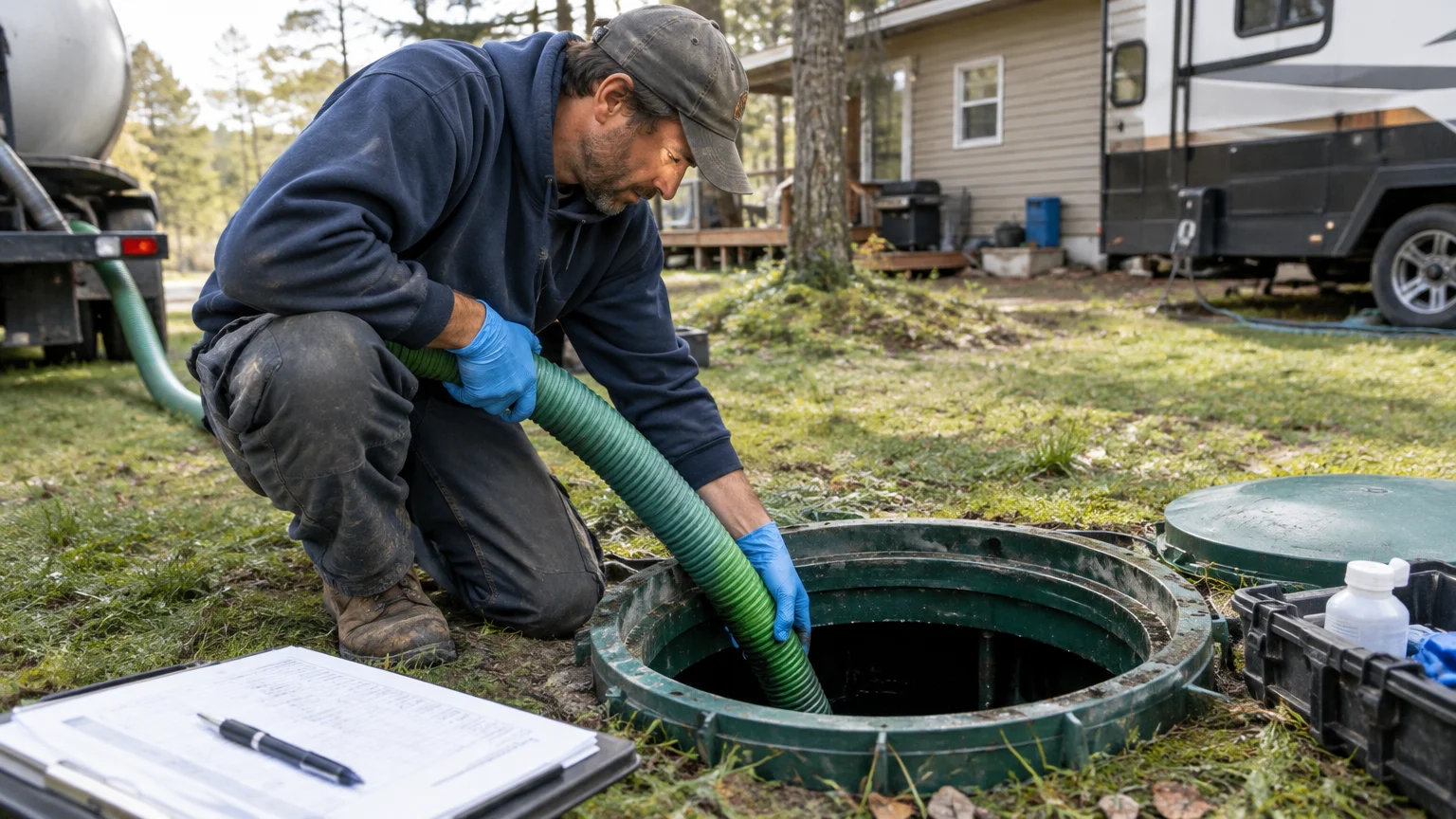
Pumping removes built-up solids and liquid from a septic tank with service equipment. An additive is a product added to the system. It does not remove tank contents, and it does not let a homeowner see whether service is needed.
That difference matters. A septic tank holds wastewater so solids can settle and some material can break down. The liquid then flows toward the drainfield, where soil helps treat it. Neither an additive nor its label can confirm that the tank, pipes, or drainfield are in good shape.
The U.S. Environmental Protection Agency explains that a septic system has a tank and drainfield as key parts of its treatment process. Homeowners can ask Septic Tank Pumping Monroe about system concerns, but product directions still need to be checked against the system and its records.
What claims does R V septic tank treatment make?
Read the current package to learn what claims R V septic tank treatment makes. Without the label, it would be misleading to say that it promises a certain result. Septic treatments may be sold for waste breakdown, odor control, or system care, but each claim needs a careful review.
Claims about waste breakdown and tank performance
A claim about breaking down waste describes what a product is said to do to material in the tank. It does not mean that all solids disappear, that the tank stays clean, or that the system no longer needs inspection. A tank also separates solids from liquid, and solids still build up over time.
A promise about better tank performance can be hard to judge without clear proof. The label may not explain how a result was tested, which system was tested, or how long the result lasted. Do not treat a broad claim as a guarantee for every tank, home, or business.
Odor claims also need care. A smell can have many causes, such as a dry plumbing trap, vent trouble, a blockage, or a system problem. A treatment might cover up a smell without fixing its cause. A strong or lasting odor is a reason to look for the source, not simply add more product.
Claims about preventing maintenance or septic problems
A product that says it helps prevent problems does not mean it prevents every kind of failure. Do not assume it can repair a cracked tank, broken pipe, blocked line, or overloaded drainfield. These problems need a diagnosis based on the property and system.
Be careful with any message that suggests a treatment can replace routine care. A tank may need inspection and pumping based on its design, use, and condition. If a label seems to promise that a system will never need pumping, ask for clear proof and compare that claim with professional advice.
A careful review separates three things: what the package says, what proof supports the claim, and what you hope the product will do. Septic Tank Pumping Monroe can help property owners discuss symptoms and care options. That discussion does not confirm a product claim unless the system itself has been checked.
What actually happens to additives inside a septic tank?
After a product enters a septic system, it follows the system’s usual flow. Its ingredients may mix with wastewater, change, settle, or leave with liquid. The exact result depends on the ingredients and the system, so the product name alone cannot tell you what will happen.
How solids, wastewater, and naturally occurring microbes behave
A septic tank is a buried container that holds wastewater from a property. Heavier material settles at the bottom as sludge. Lighter material can form a scum layer near the top. Liquid between these layers flows toward the drainfield, and microbes already in the tank help break down some waste.
An additive may contain, or claim to support, ingredients that affect waste breakdown. But a tank is not an empty container that only needs a dose of product. Wastewater enters as people use sinks, toilets, and other plumbing. Solids continue to arrive, and the amount in the tank changes over time.
A product cannot be judged only by whether it changes how tank contents look. The tank’s condition depends on the amount of solids, its structure, the inlet and outlet parts, and how the system flows. Checking these parts takes safe access and the right methods. Homeowners should never enter a septic tank because its gases and tight space can be deadly.
What happens when ingredients enter the drainfield
Liquid leaving the tank moves into the drainfield. A drainfield is a network of buried pipes or other parts that lets wastewater soak into soil. Soil helps treat the liquid as it moves through the ground. If the drainfield is damaged or overloaded, adding a product cannot be assumed to fix it.
Ingredients in a treatment may travel with wastewater, but the result depends on the product and system. Do not assume an additive is harmless to pipes, soil, groundwater, or tank parts just because it is sold for septic use. Check the label for directions and limits.
The system’s location and condition also matter. Poor drainage, wet ground, or wastewater backing up may point to a problem beyond the tank. Do not use a treatment to put off an assessment when warning signs appear. Keep the package nearby so a professional can check its ingredients and directions.
Can septic tank treatment improve septic system performance?
A septic tank treatment may affect a process named on its label, but it cannot be assumed to improve the whole system. Performance depends on the tank, pipes, drainfield, soil, and water use at the property. A product cannot repair damaged parts or prove that the system works as it should.
What an additive might affect—and what it cannot repair
If a product contains ingredients meant to act on waste, it may be designed to affect some material in the tank. The label should say what the product is meant to do. That is not proof that it can prevent a backup or extend the life of every system.
A treatment should not be expected to fix a broken pipe, leaking tank, or blocked outlet. It cannot lift a sunken drainfield or fix poor soil. These problems need a proper diagnosis and a repair plan. Adding a product does not show which part has failed.
For simple checks, a homeowner does not always need a professional. You can look for unusual wet spots, note slow drains, check for visible leaks, and record when a problem began. Do not open the tank. These checks can help explain the concern, but they cannot replace a system inspection.
Why a symptom may point to a maintenance or system problem
A slow toilet or sink may have a local plumbing cause. Several slow drains at once may point to a wider problem. A wet patch near the drainfield, sewage odors, or wastewater backing up needs prompt attention. Symptoms can have more than one cause, so a treatment is not a reliable way to find the problem.
A septic tank riser is an extension that brings an access point closer to ground level. It can make access easier, but it does not show that the system is healthy. Knowing how deep a tank is buried or where it sits helps with access and safety, but it does not tell you whether pumping is needed.
Property owners in Monroe can record symptoms and limit water use if wastewater is backing up. These steps apply to homes throughout Monroe. Keep people away from wet or unsafe areas. Septic Tank Pumping Monroe can discuss the next step when signs point to a system issue, while a qualified professional can assess the tank and drainfield.
Can septic additives replace routine pumping?
No septic additive should be assumed to replace routine pumping. Pumping removes built-up material from the tank, while an additive does not remove that material. A system needs care based on its condition and use, not just on whether a treatment was added.
Why accumulated sludge and scum still need inspection
Sludge and scum build up as a septic system is used. If too much material collects, solids may move toward parts that are meant to carry liquid. This can lead to clogs or other damage. An additive cannot show how thick these layers are or confirm that the tank is ready for more use.
An inspection lets a professional check the tank and its parts. They may look at sludge and scum levels, baffles, access points, and signs of damage. The findings help show whether pumping or other work is needed. A product’s directions cannot replace a direct look at the system.
Homeowners can help by keeping records of past pumping and inspections. Note the number of people in the home, changes in water use, and signs of trouble. These details help a professional review the system. It is unsafe to climb into a tank or lean into an opening to inspect it.
How pumping intervals depend on the system and household
There is no single pumping schedule for every property. Tank size, the number of people using it, water use, system condition, and past care can all affect when service is needed. A qualified professional can suggest a plan after learning about the tank and its use.
The question “septic tank when to pump” is best answered with an inspection and system records, not an additive claim. A home with more wastewater use may need a different care plan from a home with less use. A larger tank does not mean the system can be ignored.
Buyers and investors can ask for care records during a property review. First-time owners can find where the tank and drainfield are, then keep that information with home records. These steps make future care easier and reduce guesswork. A treatment may be a product choice, but it cannot replace knowing the system’s condition.
Are septic tank treatments safe for tanks and drainfields?
Whether a septic tank treatment is suitable depends on its ingredients, label directions, and system design. Do not consider a product safe for every tank or drainfield without checking those details. Start with the label to learn about use limits and warnings.
How to assess product ingredients and label directions
Read the full label before adding any product. Check whether it names septic systems, gives clear directions, and lists warnings. Look for directions about amount, timing, storage, and what to do if the product touches skin or eyes. Follow the package instead of guessing or adding more.
If the ingredient list is unclear, ask the maker what the product contains. A professional can also compare the label with a known system concern. This can help when a home has an older tank, a private well, or past drainfield trouble. A missing warning does not prove there are no limits.
Do not mix septic products unless the label says it is safe. Mixing household chemicals or treatments can create risks and may affect plumbing or system parts. Keep products in their original containers and away from children and pets. Follow local rules for disposal instead of pouring leftover product down a drain.
Potential concerns for pipes, soil, groundwater, and system components
A product passes through parts of the home’s plumbing and septic system. Its ingredients may also reach the drainfield with wastewater. It makes sense to think about possible effects on pipes, tank parts, soil, and nearby water. Marketing words alone cannot answer those questions.
Avoid flushing items that do not break down as expected, such as wipes labeled flushable, paper towels, grease, and hygiene products. These items can add material or cause trouble in pipes and tanks. Limiting extra water use can also help keep a system from becoming overloaded.
A septic system may be near a well or other water source, so leaks and failures need care. If the property has a private well, local health officials can explain care and testing guidance. A professional can inspect the septic system and discuss concerns about product ingredients. Do not use a treatment to hide a leak or odor.
When might using R V septic tank treatment be a poor choice?
Using R V septic tank treatment may be a poor choice when warning signs are present or the label does not clearly support the planned use. An additive should not delay help for a backup, leak, or suspected drainfield problem. Those signs need a diagnosis, not a guess based on product claims.
Warning signs that call for inspection rather than an additive
Several signs may mean a system needs attention. One sign may have another cause, but repeated or worsening problems deserve a closer look. A treatment cannot confirm what is wrong or make an unsafe condition safe.
- Wastewater backs up into a toilet, tub, or floor drain.
- Several drains become slow at the same time.
- A strong sewage smell appears inside or outside the property.
- Ground near the tank or drainfield feels wet, soft, or foul-smelling.
- Unusual green growth or standing wastewater appears in the drainfield area.
If wastewater backs up, reduce water use and keep people away from affected areas. Do not open the tank or touch sewage. Note where the symptoms happen and when they began. This information can help a professional decide what needs to be checked.
Why treatment products should not delay professional diagnosis
A symptom may come from a plumbing blockage, tank issue, damaged pipe, or drainfield failure. These problems need different responses. Adding a treatment without finding the cause could waste time and allow damage to continue.
New buyers and property investors should take care. A seller’s receipt for a product does not prove that the system was inspected or is in good shape. Before a sale or major repair, records and a professional check can help explain what is known and what remains unclear.
If the tank’s location is unknown, a professional or local records office may help find it. The answer to “how to find a buried septic tank” should not involve digging without a plan. Utility lines, buried tanks, and pipes can create safety risks. Tank depth varies by property, so guessing can damage the system or cause injury.
How should you evaluate the product’s evidence and instructions?
A fair review of R V septic tank treatment starts with the current label, then checks whether the claims have clear support. A broad claim does not show how a treatment will work in a particular home. Useful evidence explains what was tested and what the result means.
What to look for on the label and in supporting claims
The package should name the product, its intended use, ingredients, directions, and warnings. Read the whole label instead of relying on a short store or website description. If the directions do not fit your system or situation, do not guess at a safe amount.
Supporting information is more useful when it explains the test method, the kind of system, and the limits of the result. A claim that uses words like “proven” or “safe” should still explain what those words mean. A result from one setup may not apply to every home, business, tank, or soil type.
Some buyers ask, “what size septic tank for 3 bedroom house?” Bedroom count alone may not answer that question in every case. Local rules, system design, expected use, soil, and approved property plans may matter. System records can give a better starting point than a treatment package.
Questions to ask before adding any product to a septic system
A few simple questions can help you decide whether the product is worth considering. They also keep attention on the actual system instead of a broad promise.
- Does the label say the product is meant for this kind of septic system?
- What ingredients are listed, and are there warnings or use limits?
- What result does the maker claim, and what proof supports it?
- Could the symptom point to a blockage, leak, or system failure instead?
- Has the tank been checked, and are past care records available?
If these questions have no clear answers, waiting is safer than adding a product without knowing more. A homeowner can do basic upkeep, such as fixing dripping taps and avoiding improper flushing, without hiring a professional. But a problem inside a buried tank or drainfield needs a proper check. Keep the package or a clear photo of its label for that discussion.
What are safer alternatives to septic tank additives?
The safer choice is steady system care instead of relying on an additive. Simple household habits can reduce strain, while records and professional checks can help find problems. These steps cannot promise that a system will never fail, but they give owners better information than a product claim alone.
Everyday habits that protect the tank and drainfield
A homeowner does not need a professional for ordinary, safe habits. Use sinks and toilets as intended, fix leaks, and keep grease and items that do not break down out of drains. Spreading laundry and other water-heavy tasks can also reduce sudden demands on the system.
A household can use a short care checklist:
- Flush only human waste and toilet paper.
- Keep wipes, paper towels, grease, and hygiene products out of toilets and drains.
- Fix leaks and avoid wasting water where possible.
- Keep cars and heavy equipment away from the tank and drainfield.
- Keep records of inspections, repairs, and pumping.
These habits can help families, tenants, landlords, and business owners. Tenants should know who manages septic care and how to report warning signs. Owners should tell people who use the property where the system is and how to care for it. Do not plant trees or dig near buried parts until you know where they are.
Inspection, maintenance, and pumping by qualified professionals
A septic professional can check parts that are not safe or visible to a homeowner. They can review the tank’s condition, look for signs of trouble, and discuss whether pumping or repair is needed. The right service depends on what the inspection finds, not on a broad product promise.
Before buying a property, ask for service records and find out who last checked the system. If there are no records, an assessment can help set a starting point. Owners who do not know the tank’s depth or location can look for plans and local records, then ask a professional about safe access.
People may search for septic tank pump services or a septic system pumping service when they need help. Choose a qualified provider who can explain what the system needs. Septic Tank Pumping Monroe can discuss concerns and explain what an assessment may involve. Emergency pumping or 24/7 service may be relevant when urgent symptoms appear, but a product should not take the place of an inspection when trouble is present.
What is the verdict on R V septic tank treatment?
The practical verdict on R V septic tank treatment is to judge it by its current label and evidence, while keeping expectations limited. Its name does not prove that it can repair a system, prevent every problem, or replace pumping. Regular care and a professional diagnosis are safer ways to make choices.
A buyer may choose a treatment if its directions are clear and it suits the system. Still, see it as a product, not a repair plan. If the system has odors, slow drains, wet ground, or backups, finding the cause matters more than adding an additive.
Key takeaways
- Check the current package for ingredients, directions, warnings, and intended use.
- Do not assume an additive removes sludge or replaces pumping and inspection.
- Watch for backups, odors, slow drains, or wet ground.
- Keep records and use simple habits to care for plumbing and the drainfield.
- Ask a qualified professional to assess symptoms or unclear product claims.
Frequently Asked Questions
What is a septic tank?
A septic tank is a buried container that receives wastewater from a home or other property. Solids settle, lighter material rises, and liquid flows toward the drainfield. The tank and drainfield work together, so a treatment added to the tank cannot show whether both parts work well.
How deep is a septic tank buried?
There is no one depth for every septic tank. Depth depends on the property, system design, and installation. Plans, permits, or local records may help locate it. Do not dig based on a guess, since buried pipes and utility lines can be damaged, and the tank can be unsafe to open.
What is a septic tank riser?
A septic tank riser is an extension that brings the tank’s access opening closer to the ground. It can make professional access easier and reduce digging. A riser does not show whether the tank needs pumping or whether the system works well.
Can R V septic tank treatment stop septic odors?
Check the product label to see whether it claims to address odors, but a smell can have several causes. It may come from plumbing, a vent, a blockage, or a septic system issue. If the odor lasts or grows stronger, find its cause instead of relying only on treatment.
Can an additive fix a septic backup?
Do not rely on an additive to fix a backup. A backup may come from a blocked pipe, a full tank, or another system problem. Reduce water use, avoid contact with wastewater, and get help finding the cause. Do not open or enter the tank.
Conclusion
Septic care is easier when owners know their system, keep useful records, and act on warning signs. R V septic tank treatment may be considered only after its label and claims are checked. It should not replace inspection, pumping, or repair when the system needs attention.
Property owners with septic system questions can Contact us to discuss the concern and possible next steps with Septic Tank Pumping Monroe.
If you are not sure what you are dealing with, it is worth having someone look at it before it turns into a bigger job. Get in touch with Septic Tank Pumping Monroe today and we will tell you where you stand.