The key difference in septic vs cesspool systems is how they treat wastewater. A septic system uses a tank to settle solids before liquid moves to a drainfield for soil treatment. A cesspool combines storage and disposal in one pit, so it gives less treatment and may pose greater groundwater concerns.
Table of Contents
- What is the difference between a septic system and a cesspool?
- How does a septic system work?
- How does a cesspool work?
- Septic vs cesspool: What happens inside each system?
- What parts make up a septic system?
- What parts make up a cesspool?
- What is the visual difference between a septic system and a cesspool?
- Which system is safer for groundwater and the environment?
- Are cesspools legal, and can they be replaced with septic systems?
- Which system is right for a property, and what are the common misconceptions?
What is the difference between a septic system and a cesspool?
A septic system separates treatment from wastewater disposal. A cesspool usually combines both jobs in one underground structure. This difference affects how solids settle, how liquid leaves the system, and how much treatment happens before wastewater reaches nearby soil.
A septic system has a watertight tank and a separate drainfield. The tank holds wastewater long enough for heavy solids to sink and lighter material to float. The liquid layer then moves to the drainfield. There, soil filters and treats the wastewater as it moves down.
A cesspool is a pit with porous walls, openings, or both. Wastewater enters the pit and slowly leaves through the sides and bottom. Solids may collect inside, but the system has less space and fewer treatment steps than a modern septic design.
The terms are often confused because both systems serve properties without public sewer service. People may also call a septic tank a cesspool in casual speech. Technically, the two designs work in different ways.
The spelling question is simple: the word is spelled cesspool. Older records may use terms such as seepage pit or drywell. A property owner should trust the site plan, permit record, and inspection findings instead of a casual name.
Septic Tank Pumping Monroe can help property owners understand which type of system serves a home or building. A careful review matters before pumping, digging, buying property, or planning an addition. This is useful for homeowners in Monroe who are not sure what lies below the yard.
How does a septic system work?
A septic system collects wastewater in a buried tank, separates solids from liquid, and sends treated liquid to a drainfield. The drainfield spreads wastewater through soil for more treatment.
Wastewater first leaves the building through a sewer pipe. It enters the tank through the inlet pipe. The tank slows the flow. Heavy solids form a bottom layer called sludge. Grease and other light material form a top layer called scum. The middle layer is mostly liquid effluent.
An outlet pipe carries liquid toward the drainfield. A baffle or outlet filter helps keep floating solids from leaving the tank. Some systems use a pump tank, lift station, or distribution box when the drainfield sits higher than the tank or needs even flow.
The drainfield has perforated pipes or similar parts. These spread effluent across a prepared area. Soil absorbs the liquid and supports natural treatment by helpful microbes. The soil also helps remove some solids and pollutants before water moves deeper.
A septic system does not make wastewater harmless at once. It needs regular care, suitable soil, and enough space. Too much water at one time can overload the tank and drainfield. Harsh chemicals, leaks, and blocked pipes can also lower system performance.
Homeowners can safely protect the system by fixing leaking fixtures, keeping vehicles off the drainfield, and avoiding large plant roots near buried pipes. Tank inspection and septic pumping should be handled by trained workers because lids, gases, and dirty wastewater can create serious hazards.
Simple maintenance does not always require a professional. Homeowners can watch for wet spots, keep access covers clear, spread out laundry, and fix small plumbing leaks. A professional is needed for tank pumping, emergency pumping, repairs, locating buried parts, or work near sewage.
How does a cesspool work?
A cesspool stores wastewater in one underground pit and lets liquid escape through porous walls or the bottom. Since storage and disposal happen in one place, the design gives less separation and treatment than a tank-and-drainfield system.
Older cesspools may have brick, block, stone, or concrete walls. Some have open bottoms. Others use gaps between wall sections to let water seep into nearby soil. Wastewater enters through a pipe and collects inside the structure.
As wastewater sits, heavier material settles. Liquid then moves outward through the surrounding soil. Some natural treatment can happen there, but the result depends on soil type, groundwater depth, system condition, and the amount of wastewater entering the pit.
A cesspool has limited treatment capacity because it lacks a separate settling tank and planned drainfield. Solids can block openings and slow the flow. When the pit becomes overloaded, wastewater may rise toward the surface or move through soil before enough treatment occurs.
Cesspools may also be hard to find. Records can be incomplete, and old covers may be buried. A property owner should never enter a cesspool or open an unknown cover without professional help. Toxic gases, weak walls, and dirty water can cause severe injury or death.
A cesspool is not the same as a septic pumping tank. A septic tank is one part of a larger treatment system. A cesspool is usually the main holding and disposal structure. The correct name matters when a professional reviews permits, safety concerns, or replacement choices.
Septic vs cesspool: What happens inside each system?
In septic vs cesspool comparisons, the main difference is controlled treatment. A septic system separates solids, liquid, and scum inside a tank before sending liquid to a planned soil area. A cesspool sends wastewater into one pit where storage and seepage overlap.
Inside a septic tank, bacteria begin breaking down organic material. This process does not remove every pollutant. It reduces some solids and changes the wastewater before it reaches the drainfield. The tank still needs inspection and pumping because sludge and scum continue to build up.
The drainfield then receives liquid effluent. Its soil, oxygen levels, depth, and structure affect treatment. Slow or packed soil may not accept water well. Very sandy soil may let water move too quickly. A high water table can limit the space available for treatment.
Inside a cesspool, liquid moves into nearby soil from the same structure that holds solids. The surrounding soil may provide some filtering, but the treatment area is less controlled. A damaged wall, heavy flow, or shallow groundwater can increase the chance of pollution.
Pollution concerns can include sewage bacteria, nutrients, and other wastewater contaminants. Signs may include wet ground, bad smells, unusually green grass, sewage backups, or slow drains. These signs can have other causes, so testing and an on-site review are needed before drawing conclusions.
Neither design should receive paint, solvents, medicines, grease, wipes, or other harmful materials. These items can damage treatment, clog pipes, or enter soil and groundwater. A septic system or cesspool should receive only normal household wastewater unless it was designed for another use.
What parts make up a septic system?
A septic system includes more than the buried tank. It may have building sewer pipes, an inlet, tank chambers, baffles, an outlet filter, access covers, a distribution box, a pump, and a drainfield.
The tank is usually buried below the ground. Owners often ask how deep a septic tank should be or how deep a septic tank is buried. There is no single depth for every property. Soil cover, frost conditions, tank design, site grade, and local rules all affect placement.
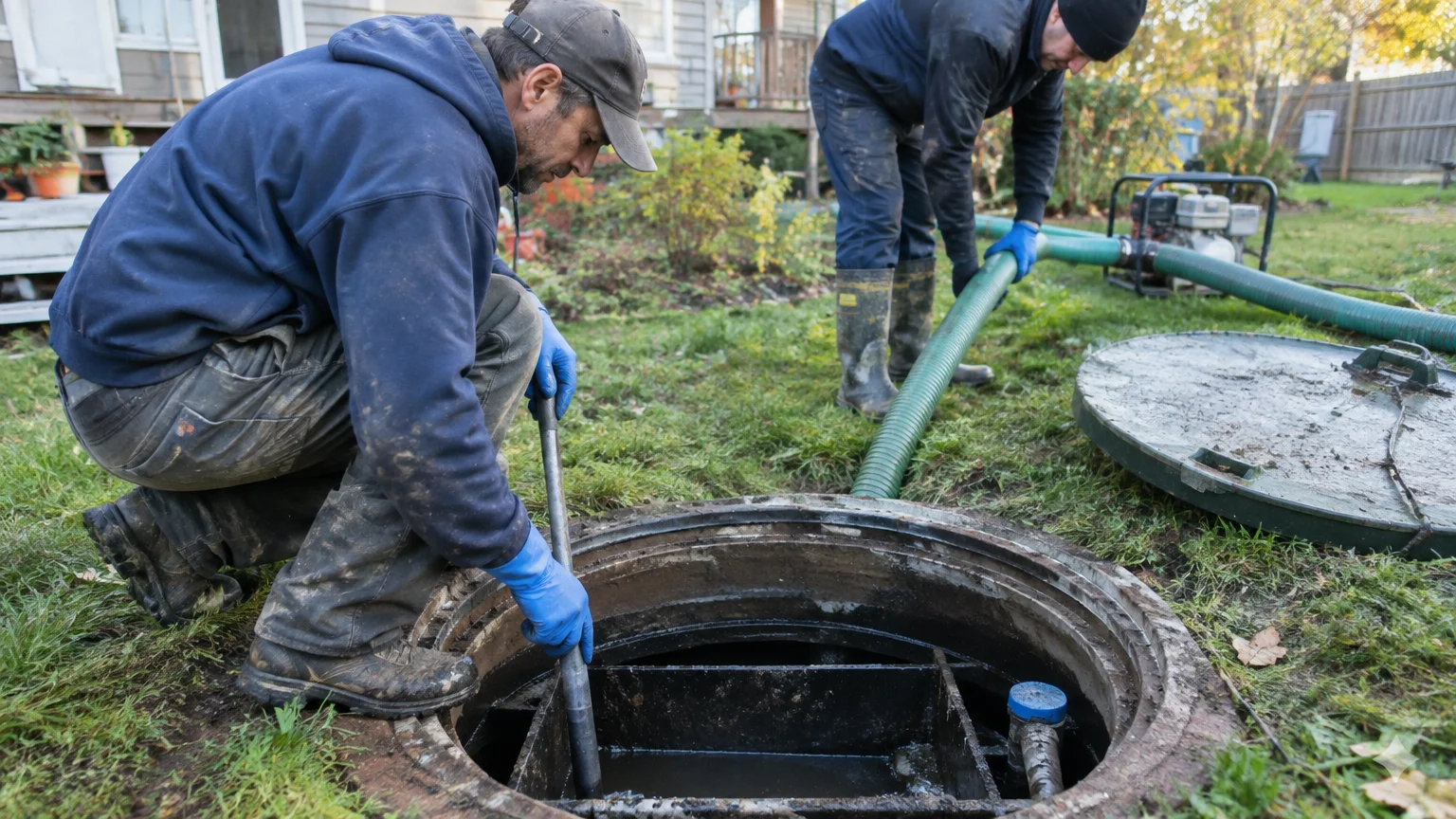
Access covers let workers inspect and pump the tank. Covers should stay secure and easy to find. Buried or damaged covers create a safety risk and can make routine care harder. Property owners should not place decks, sheds, driveways, or heavy equipment over access points unless the system was designed for that load.
A baffle guides incoming and outgoing flow. The outlet filter helps stop larger solids from reaching the drainfield. Some systems also use an alarm, pump chamber, electrical controls, or a distribution box. These parts need different checks and may fail in different ways.
The drainfield includes pipes and soil. It may be beneath grass or another approved surface. The area should stay clear of vehicles, storage, deep-rooted trees, and structures. Extra water from roof drains, sump pumps, or yard runoff should not enter the drainfield.
A professional can locate and identify these parts with records, probing tools, cameras, or other methods. A homeowner may perform simple upkeep, such as keeping the area clear and watching for wet spots. Opening tanks, cleaning filters, or handling sewage calls for training and protective equipment.
What parts make up a cesspool?
A cesspool usually has a pit, a wall or lining, an inlet pipe, an access opening, and the soil around it. The exact design depends on its age, local building practice, and the materials used when it was installed.
The wall may be made from masonry, concrete, stone, or another material. Some older walls have openings that let liquid escape. The bottom may also be open. These features explain why nearby soil becomes part of the disposal system.
An access opening may be covered by a slab, lid, or buried cap. A hidden opening can be dangerous for people, pets, and equipment. Property owners should keep children away from suspected structures and arrange a professional location and safety check.
Cesspools differ from newer wastewater systems because they usually lack a separate septic tank and planned drainfield. They may also lack modern filters, alarms, distribution controls, and documented treatment zones. That does not mean every old system has the same condition or risk.
A cesspool may appear to work for years when water use stays low and the soil accepts flow. Problems can develop after a household grows, a building changes use, groundwater rises, or the structure begins to collapse. Slow drains and odors should not be ignored.
Replacing or changing a cesspool is not a simple digging job. The property may need soil testing, setback checks, design approval, and a permitted installation. A septic pumping professional can help identify the structure and explain which licensed specialists or local offices need to be involved.
What is the visual difference between a septic system and a cesspool?
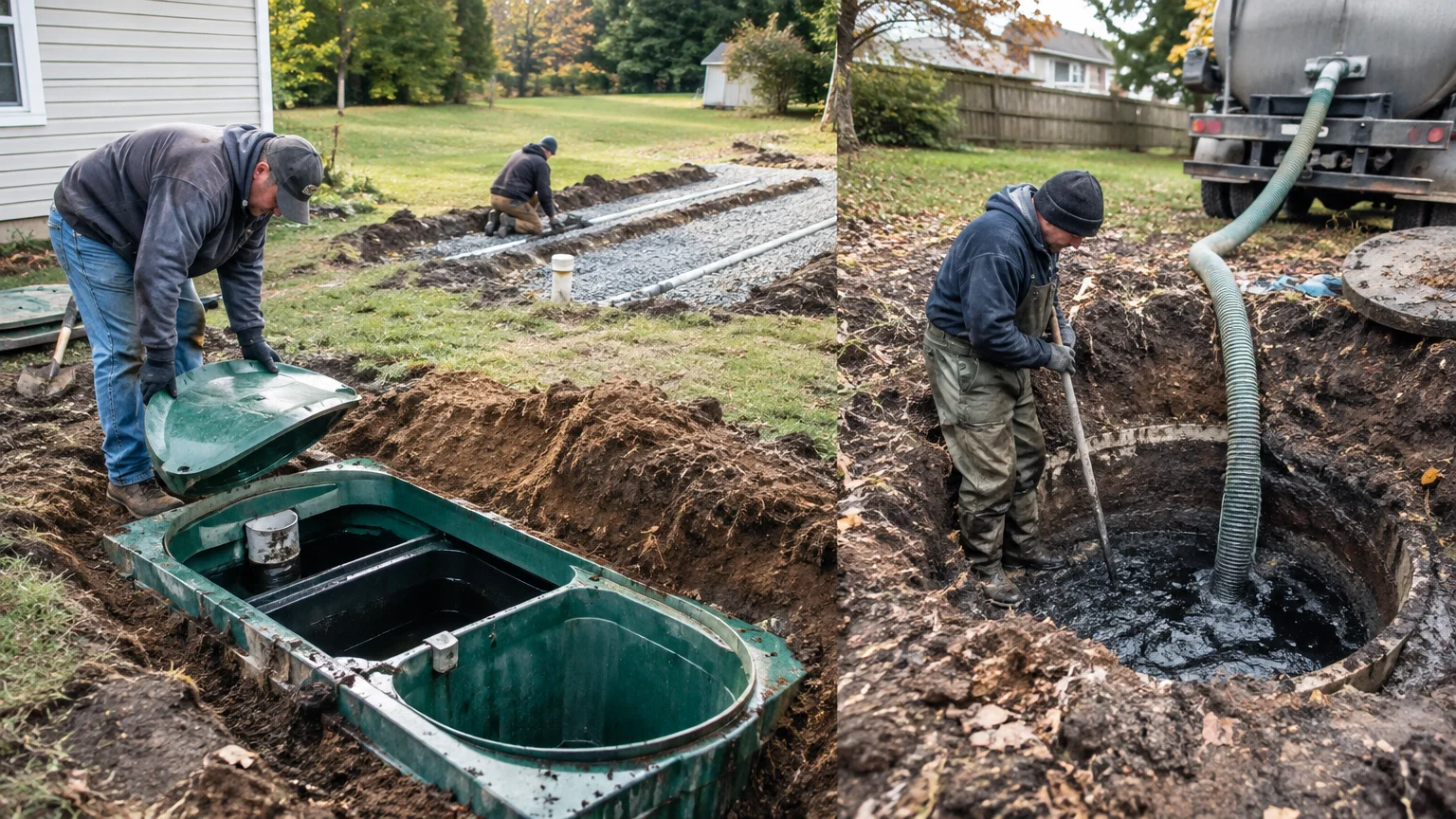
A septic system usually appears as two connected zones: a buried tank near the building and a separate drainfield farther away. A cesspool usually appears as one pit that receives wastewater and releases it into nearby soil.
In a typical septic system, a house sewer pipe leads to a watertight tank. Inside the tank, sludge settles at the bottom, liquid remains in the middle, and scum floats at the top. An outlet leads to a distribution box and perforated drainfield pipes.
Clean soil covers the drainfield. Access covers provide entry for inspection and care but should stay securely closed. The main parts include the inlet, outlet, tank, liquid effluent, drainfield, and soil treatment area.
A typical cesspool consists of one underground pit connected to an inlet pipe. Liquid moves through porous walls or the bottom into nearby soil. Shallow groundwater near the pit may increase pollution concerns.
Real systems may look different from simple diagrams. Some septic systems use pumps, pressure lines, multiple tanks, or advanced treatment units. Some cesspools have solid liners or unusual shapes. A drawing explains the basic idea, but it cannot confirm a system type at a property.
Records, inspection openings, soil features, and professional locating work provide better answers. Septic Tank Pumping Monroe can help owners understand what a diagram means when the buried system is difficult to identify.
Which system is safer for groundwater and the environment?
A properly designed and maintained septic system is generally safer for groundwater than a cesspool because it separates settling from soil treatment. The actual risk depends on design, soil, groundwater depth, use, maintenance, and system condition.
A septic system gives solids a place to settle before liquid reaches the drainfield. The drainfield spreads flow over a planned area. This lets soil treat wastewater more evenly. A failed tank, blocked outlet, or wet drainfield can still cause pollution.
A cesspool sends wastewater into soil close to the pit. If the soil is thin, sandy, cracked, flooded, or close to a well, pollutants may move more easily. A leaking cesspool can also affect surface water or nearby property.
Warning signs include sewage odors, standing wastewater, soggy ground, unusually bright grass over the system, repeated backups, and a drop in well-water quality. These signs do not prove one cause. They do show that prompt evaluation is wise.
Property owners should keep wells, streams, ponds, and drainage areas protected from wastewater. They should also direct stormwater away from septic parts. Heavy rain can saturate soil and make an existing problem worse.
Testing may be needed when a private well is nearby or contamination is suspected. A qualified professional can inspect the wastewater system, while a certified laboratory can test water. Local health or environmental officials may provide more direction when public health is involved.
Are cesspools legal, and can they be replaced with septic systems?
Cesspool rules vary by state, county, city, age of the system, and property conditions. Some existing cesspools may remain under limited conditions, while new ones may be restricted or banned. Owners should check current local rules before making changes in Monroe.
A replacement may be possible when the property has enough suitable soil, usable space, and proper separation from wells, buildings, property lines, and water features. The site may also need a soil review or percolation test. A perc test measures how quickly water moves through soil for wastewater planning.
Replacement work depends on system size, soil, access, design, permits, excavation, tanks, pumps, and site repairs. Some projects are simpler than others. The final cost is confirmed on a quote after the property and required work are reviewed.
A property owner should gather the site plan, permits, past pumping records, inspection reports, and information about wells. If records are missing, a professional may locate the system and document what can be found.
Before closing on a property, buyers should ask who will inspect the system and what the inspection includes. A general home inspection may not provide a full septic evaluation. Investors and landlords should also consider future occupancy, water use, and repair access.
Changing a wastewater system without approval can create safety, legal, and resale problems. The safest path is to confirm requirements with the local authority and use qualified contractors for design, installation, pumping, and disposal.
Which system is right for a property, and what are the common misconceptions?
The right wastewater system depends on property use, soil, space, groundwater, local rules, and expected flow. A modern septic system is often the preferred replacement for an older cesspool, but the site must support the design.
A larger home, rental property, or business may produce more wastewater than an old cesspool can handle. A system designed for a small home may not suit a restaurant, office, or multi-unit building. Expected use must be part of the review.
Common misunderstandings include these:
- Pumping does not repair every problem. Pumping removes built-up solids, but it cannot fix a crushed pipe, failed drainfield, unsafe cesspool wall, or poor soil.
- A drainfield is not a second trash area. Vehicles, sheds, pools, and deep roots can damage pipes and pack down soil.
- A septic tank is not a cesspool. The tank is one part of a system that also needs a drainfield or approved treatment method.
- Slow drains do not always mean the tank is full. A blocked household line, damaged pipe, wet soil, or failing pump can cause similar signs.
- More water is not always better. Spreading laundry and fixing leaks can help prevent sudden loading, but it cannot correct an undersized or failed system.
Homeowners can safely reduce strain by using water wisely, keeping records, and watching the system area. They should not enter tanks, lean over open access points, or handle sewage without proper training.
Key takeaways
- A septic system uses a tank and a separate drainfield.
- A cesspool combines storage and soil disposal in one pit.
- Septic systems need suitable soil, regular care, and safe access.
- Cesspool rules and replacement options depend on local requirements.
- A professional review is important before digging or changing a buried system.
Conclusion
The main lesson in septic vs cesspool comparisons is that system design controls wastewater treatment. Septic systems provide more separation and planned soil treatment. Cesspools use one pit and may create greater groundwater concerns, especially when old, damaged, overloaded, or close to wells.
Septic Tank Pumping Monroe helps property owners understand septic tanks, cesspools, drainfields, pumping needs, and the surrounding Monroe area, from Downtown Monroe to Walnut Grove, Good Hope, Between, Loganville, and nearby communities. Contact us to arrange a professional review of the wastewater system and discuss the next practical step.
Frequently Asked Questions
What is a septic tank?
A septic tank is a buried, watertight container that holds wastewater from a property. Heavy solids settle, light material floats, and liquid leaves through an outlet. The liquid then travels to a drainfield or another approved treatment area. The tank needs inspection and pumping because solids do not disappear completely.
How deep is a septic tank buried?
A septic tank may be buried at different depths based on tank design, soil cover, climate, property grade, and local rules. Access covers should remain findable and secure. Property owners should not dig blindly because underground pipes, electrical parts, and unsafe openings may be nearby.
How often should a septic tank be pumped?
The timing depends on tank size, household size, water use, wastewater strength, and the amount of solids present. Inspection findings are more useful than a fixed guess. A professional can check sludge and scum levels and explain whether pumping is needed before the system develops a backup.
Can a cesspool be converted to a septic system?
A cesspool may be replaced with a septic system when the property meets current site and health rules. Soil, space, groundwater, setbacks, flow, and permits all matter. The owner should obtain a site review before planning work because an existing cesspool location may not suit a new drainfield.
Is septic pumping the same as septic tank cleaning?
People often use the terms together, but they can describe different work. Pumping removes liquid and built-up solids from the tank. Cleaning may include extra attention to filters, inlet areas, or accessible parts. The exact service should be confirmed before work begins, especially when a system has backups or damage.
If you are not sure what you are dealing with, having the system checked can help prevent a larger problem.
If you are not sure what you are dealing with, it is worth having someone look at it before it turns into a bigger job. Get in touch with Septic Tank Pumping Monroe today and we will tell you where you stand.